

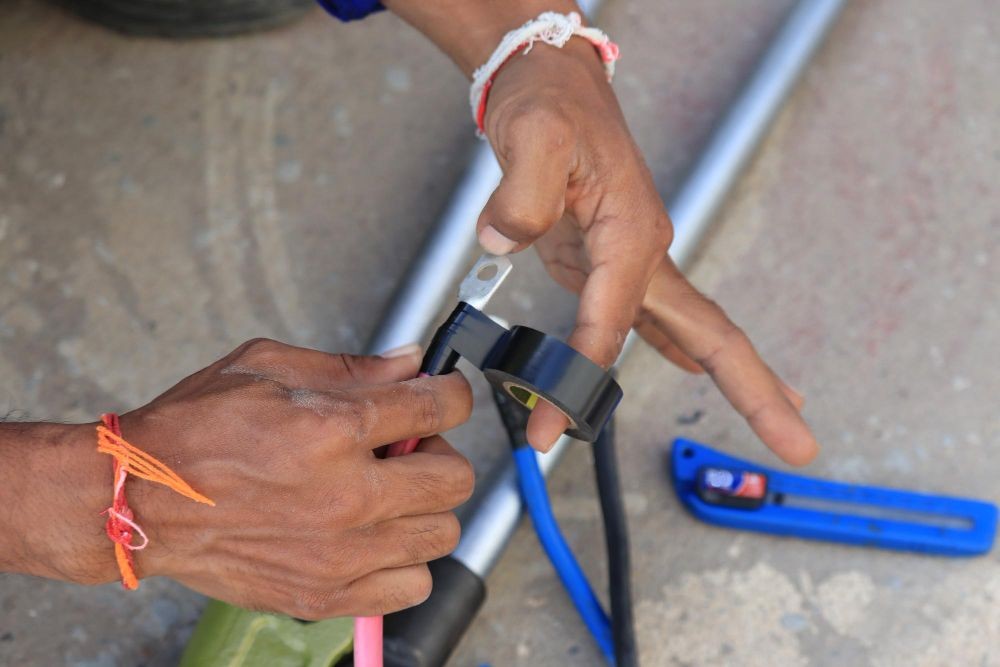
An electrical insulator is a critical component in every power system. Its primary role is to prevent the unwanted flow of current and ensure safety, reliability, and efficiency in electrical transmission and distribution networks. Traditionally, materials like porcelain and glass have dominated the field of insulators, but in recent years, polymer composite insulators have emerged as the superior choice.
At Al Yamuna Densons, we specialize in designing and manufacturing advanced polymer composite insulators that cater to modern electrical infrastructure needs.
An electrical insulator is a material or device that resists the flow of electricity. It ensures that high-voltage current remains confined to conductors, preventing dangerous leakage, short circuits, or accidents. Common examples include pin insulators, suspension insulators, and strain insulators used in power lines.
Polymer composite insulators are made from fiberglass-reinforced plastic (FRP) cores, covered with silicone rubber or EPDM housings, and fitted with strong metallic end fittings. This structure makes them:
| Type | Advantages | Limitations |
|---|---|---|
| Porcelain Insulator | Strong, thermally stable | Heavy, brittle, prone to cracks |
| Glass Insulator | Excellent dielectric properties, transparent | Fragile, condensation issues |
| Polymer Composite | Lightweight, hydrophobic, durable | Higher initial cost but long-term benefits |
Polymer composite insulators offer the best balance between performance, durability, and cost-effectiveness, making them the preferred choice for modern power utilities.
Polymer composite insulators are widely used in:
Their design ensures reliable performance across diverse environments—from deserts to humid coastal regions.
Power utilities prefer polymer composite insulators for their efficiency, safety, and long-term savings. By reducing maintenance requirements and enhancing reliability, these insulators ensure uninterrupted power supply.
Some major benefits include:
While polymer composite insulators offer several advantages, they must be designed and manufactured with precision to withstand decades of operation. Issues like UV degradation and aging can occur if low-quality materials are used. That is why choosing a reliable manufacturer like Al Yamuna Densons is essential to ensure top-quality products.
The shift from porcelain and glass to polymer composite insulators marks a major step forward in modernizing electrical infrastructure. Their lightweight design, superior performance, and long service life make them the most reliable choice for today’s power transmission and distribution networks.
At Al Yamuna Densons, we are committed to delivering high-performance electrical insulators that meet international quality standards and provide long-lasting solutions for global power systems.
An electrical insulator is a material that prevents the flow of electric current by resisting conductivity. It is commonly used in power systems to support and separate conductors.
The main types are porcelain insulators, glass insulators, and polymer/composite insulators. Each has specific applications depending on voltage, strength, and environmental conditions.
Polymer composite insulators are lightweight, durable, weather-resistant, and require low maintenance, making them suitable for modern power transmission and distribution networks.
Insulators restrict the free movement of electrons, ensuring that electricity flows only through conductors. This protects systems from short circuits and prevents leakage currents.
They are used in power transmission lines, substations, electrical equipment, transformers, circuit breakers, and distribution systems to provide safety and reliability.
Have a question, idea, or requirement? Drop us a message and our team will get back to you with clear answers no fluff, no delay.